Chemical safety
Current SDS, labels, approved containers, segregation, training, spill response, and disposal.

A beautiful store does not excuse an unsafe bench. Safety must be visible in the products, labels, zones, training, equipment, records, and authority to stop.
Workers may complete only tasks for which the material, product, equipment, PPE, ventilation, and competency requirements are known. A worker who sees an uncontrolled hazard must be able to stop the task without retaliation.
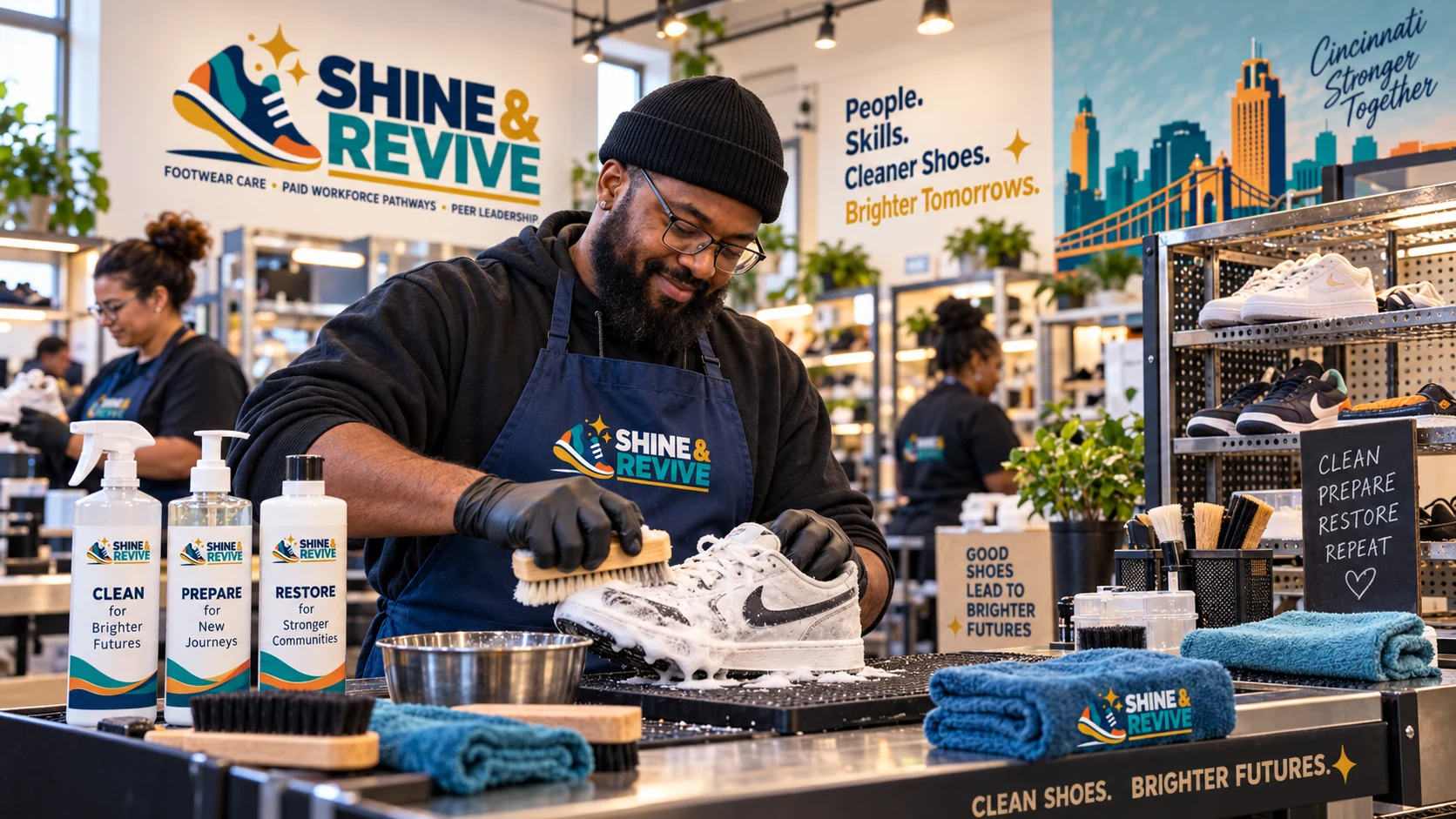 Concept visualization
Current SDS, labels, approved containers, segregation, training, spill response, and disposal.
Hazard assessment, gloves, eye and skin protection, equipment guards, inspections, and competency.
Public intake, receiving, quarantine, dry and wet production, drying, finishing, QA, inventory, and support areas.
Decline, isolate, or refer items with biological, chemical, pest, needle, drug, or unknown contamination risk.
First aid, fire, evacuation, injury, spill, security, incident, claim notification, and restart authority.
No unsupported medical sanitation, disinfection, waterproofing, restoration, or safety claims.
These concept visualizations make the planned workflow easier to understand. They do not represent an open storefront, current staff roster, or active public services.
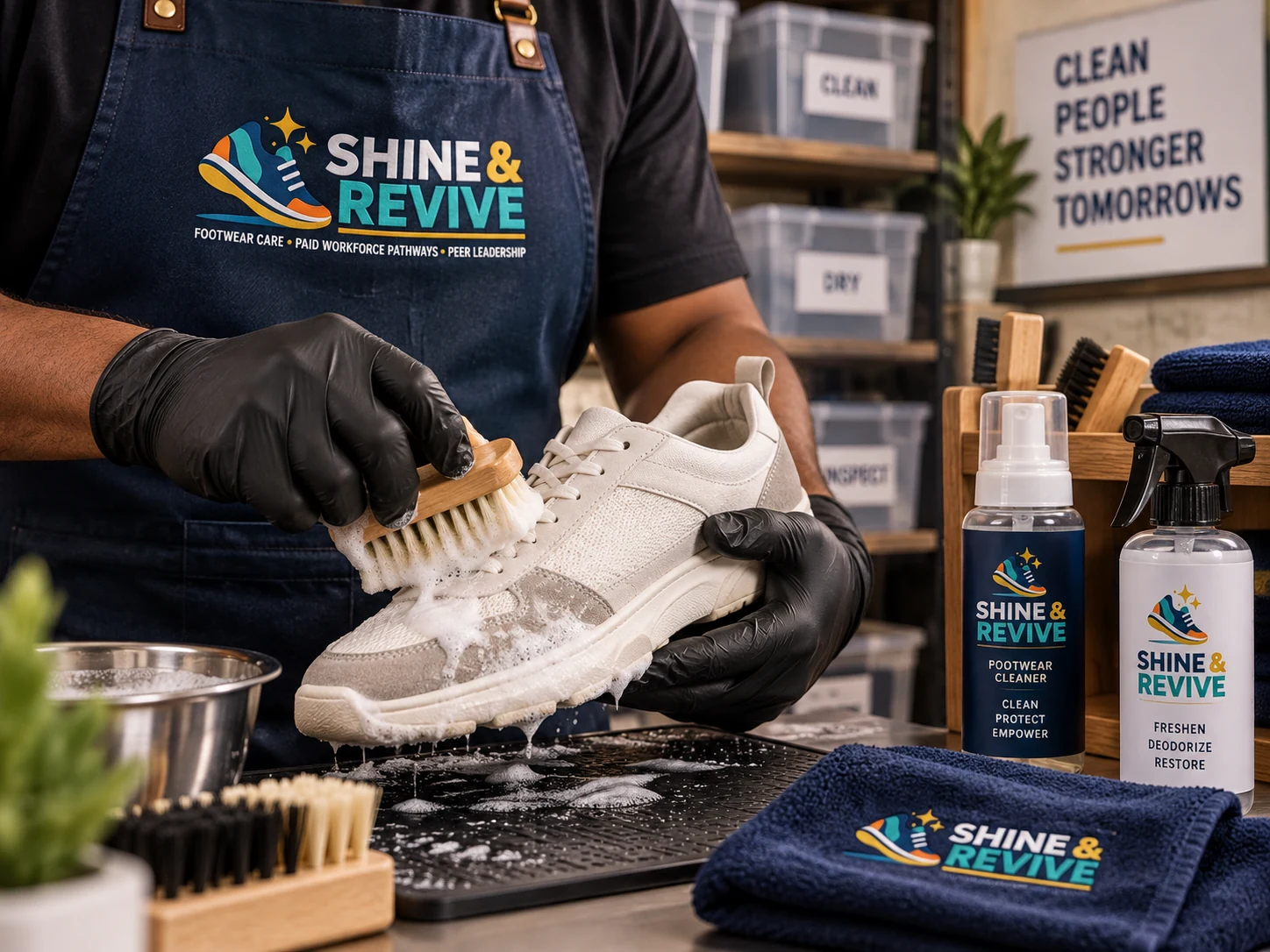 Concept visualizationMaterial-specific footwear care
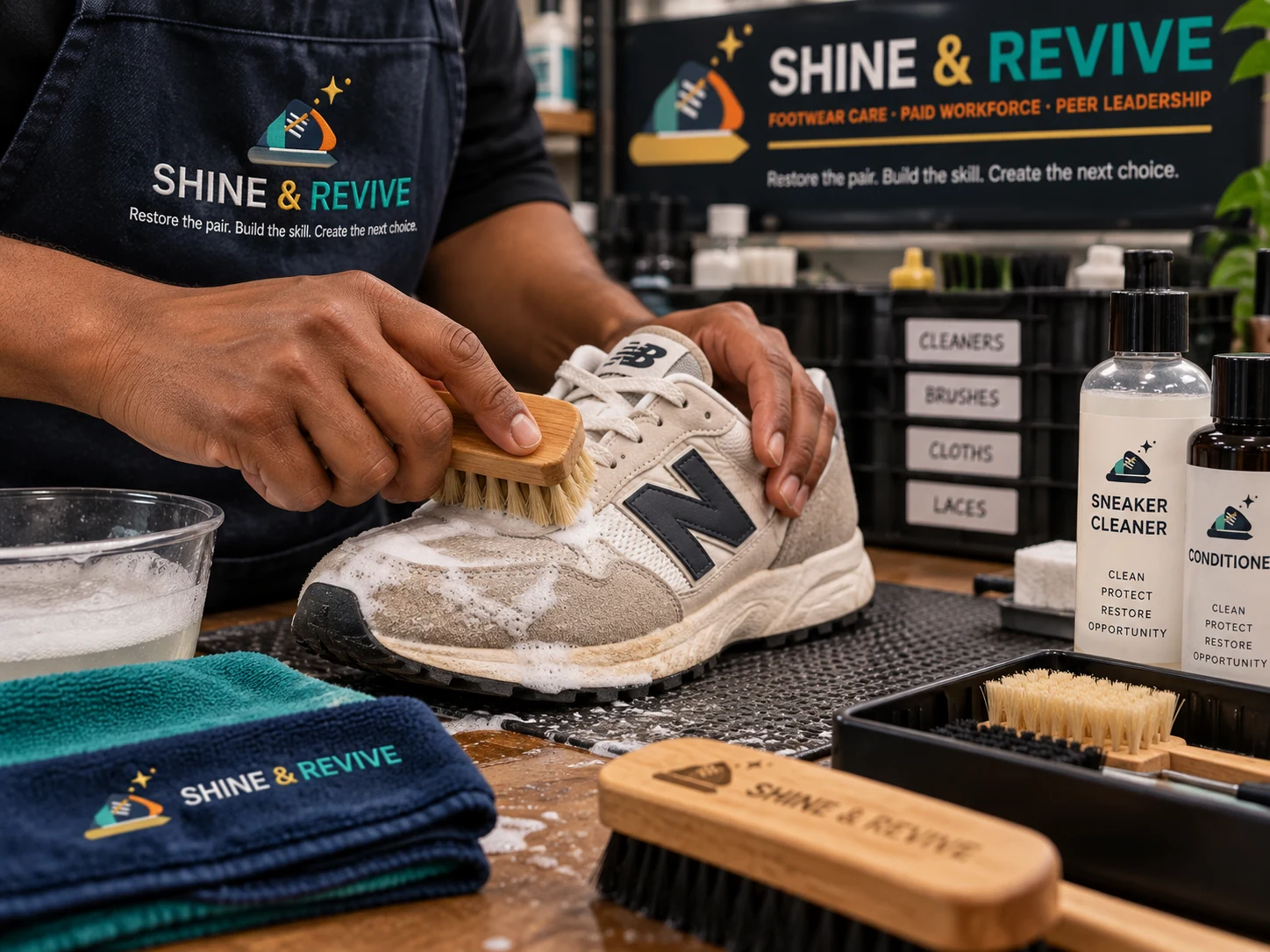 Concept visualizationCare technique and organized tools
 Concept visualizationCompetency-gated leather finishing