Source or customer intake
Receive a customer pair, approved batch, or lawful donation through a documented channel.
Primary role: Donation & Intake Coordinator
The complete lifecycle connects customer service, safety, inventory, paid work, craft, quality, disposition, and performance evidence.
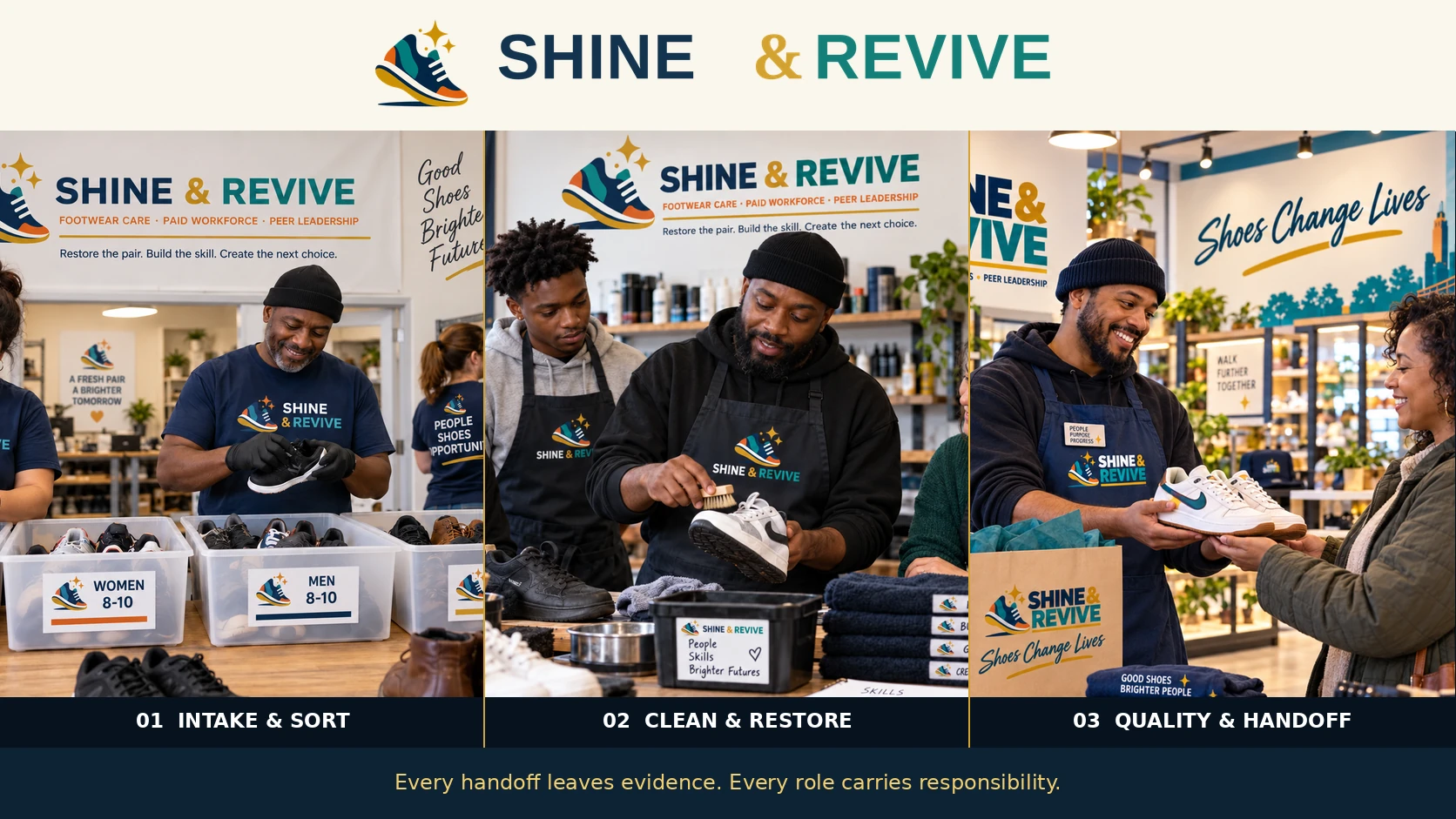 Concept visualization
Receive a customer pair, approved batch, or lawful donation through a documented channel.
Primary role: Donation & Intake CoordinatorVerify who owns the footwear, what may be done, and what disposition is permitted.
Primary role: Customer & Intake AssociateCheck contamination, mold, pests, recalls, counterfeit concerns, structural failure, and scope.
Primary role: Condition Screening AssociateCreate the baseline photo set, assign a unique ID, and record the controlled storage location.
Primary role: Inventory & Custody AssociateIdentify materials, select an approved method, disclose risks, and confirm price or agreement status.
Primary role: Material Assessment LeadAssign only authorized tasks to trained workers through payroll, supervision, and timekeeping.
Primary role: Bench CaptainRemove loose soil, clean by material, manage laces and insoles, and preserve the documented scope.
Primary role: Footwear Care AssociatePerform only approved cosmetic finishing, conditioning, edge work, or minor restoration.
Primary role: Restoration AssociateUse controlled air drying, reshape where appropriate, and reassemble the pair without hidden moisture.
Primary role: Drying & Reassembly AssociateCompare the result with the intake record, disclose limitations, and stop release when standards fail.
Primary role: Quality ReviewerComplete the approved disposition: customer handoff, B2B return, condition-graded resale, charitable award, recycling, or disposal.
Primary role: Handoff / Listing AssociateClose the work order, inventory, payment or restriction record; measure quality, rework, hours, and outcomes.
Primary role: Operations & Data CoordinatorA work order is complete only when the pair is reconciled to the correct customer or disposition, payment or agreement evidence is complete, the final condition is disclosed, feedback or complaint routes are available, and custody is closed.
Any trained staff member must be able to stop work when material, chemical, contamination, equipment, custody, counterfeit, injury, privacy, labor, or quality risk exceeds approved scope. Mission pressure cannot override safety.
These concept visualizations make the planned workflow easier to understand. They do not represent an open storefront, current staff roster, or active public services.
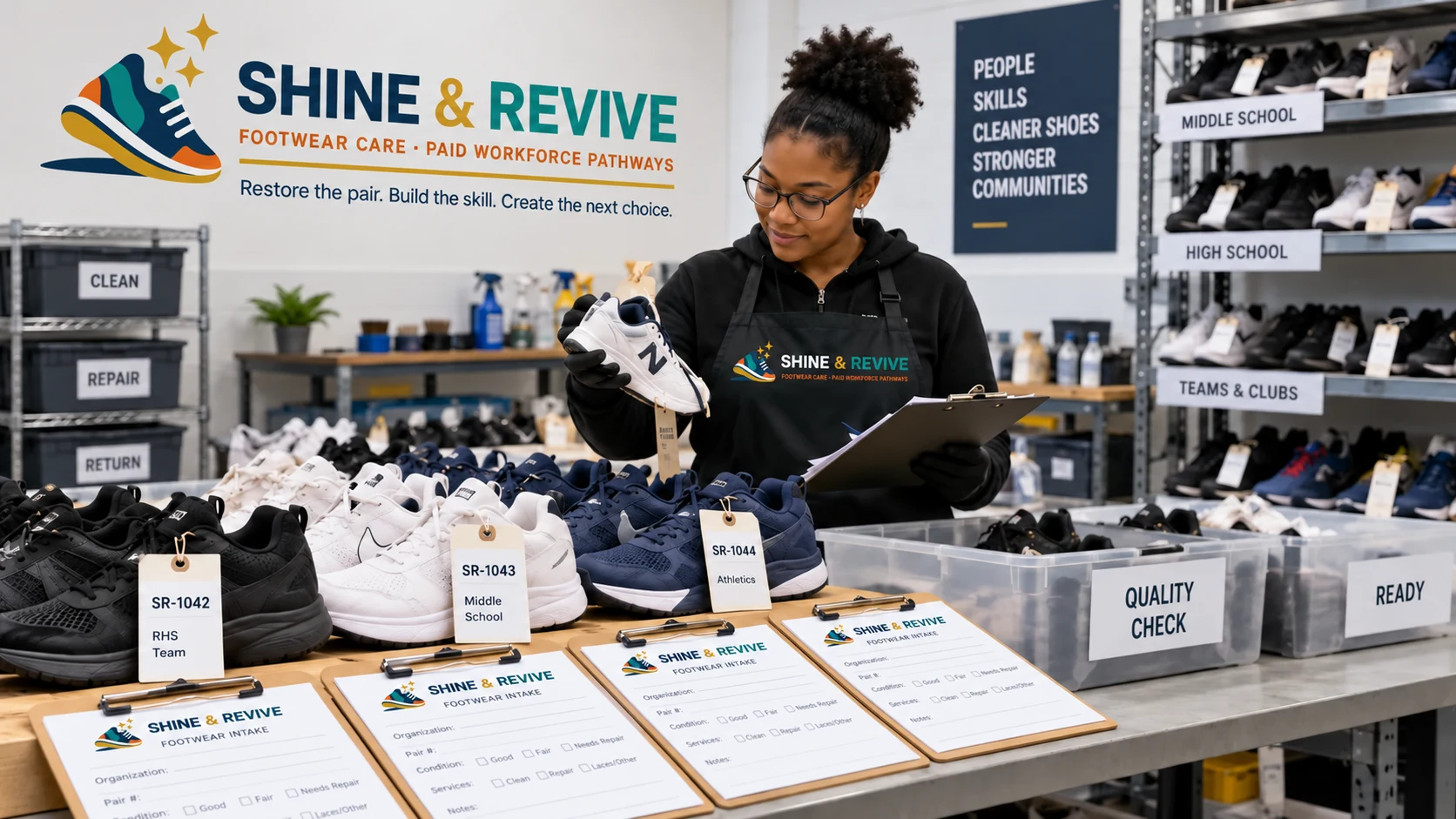 Concept visualizationTagged inventory and quality intake
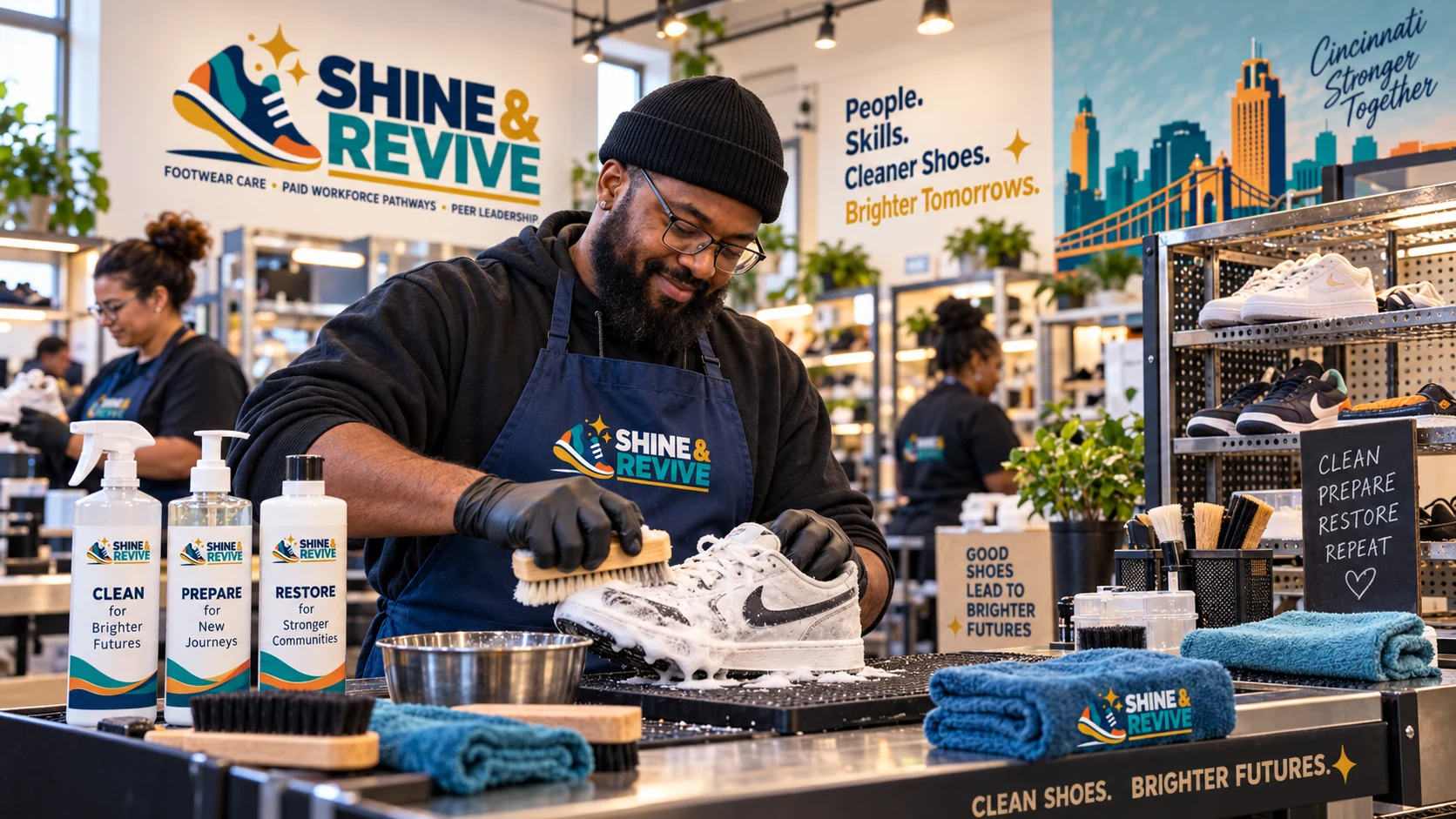 Concept visualizationPaid cleaning production
 Concept visualizationDocumented customer handoff