Nonclinical Workforce Enterprise · Cincinnati and Hamilton County, Ohio
The operating thesis

The storefront is an operating system—not shelves, a cash register, and a prayer.

Revenue may come from care, restoration, condition-graded resale, and institutional partnerships. Mission becomes credible when those activities produce lawful paid work, portable skill, traceable property, independent quality evidence, real peer authority, private charitable access, and pathways beyond the enterprise.

5controlled service lanes
12lifecycle decisions
16peer and workforce roles
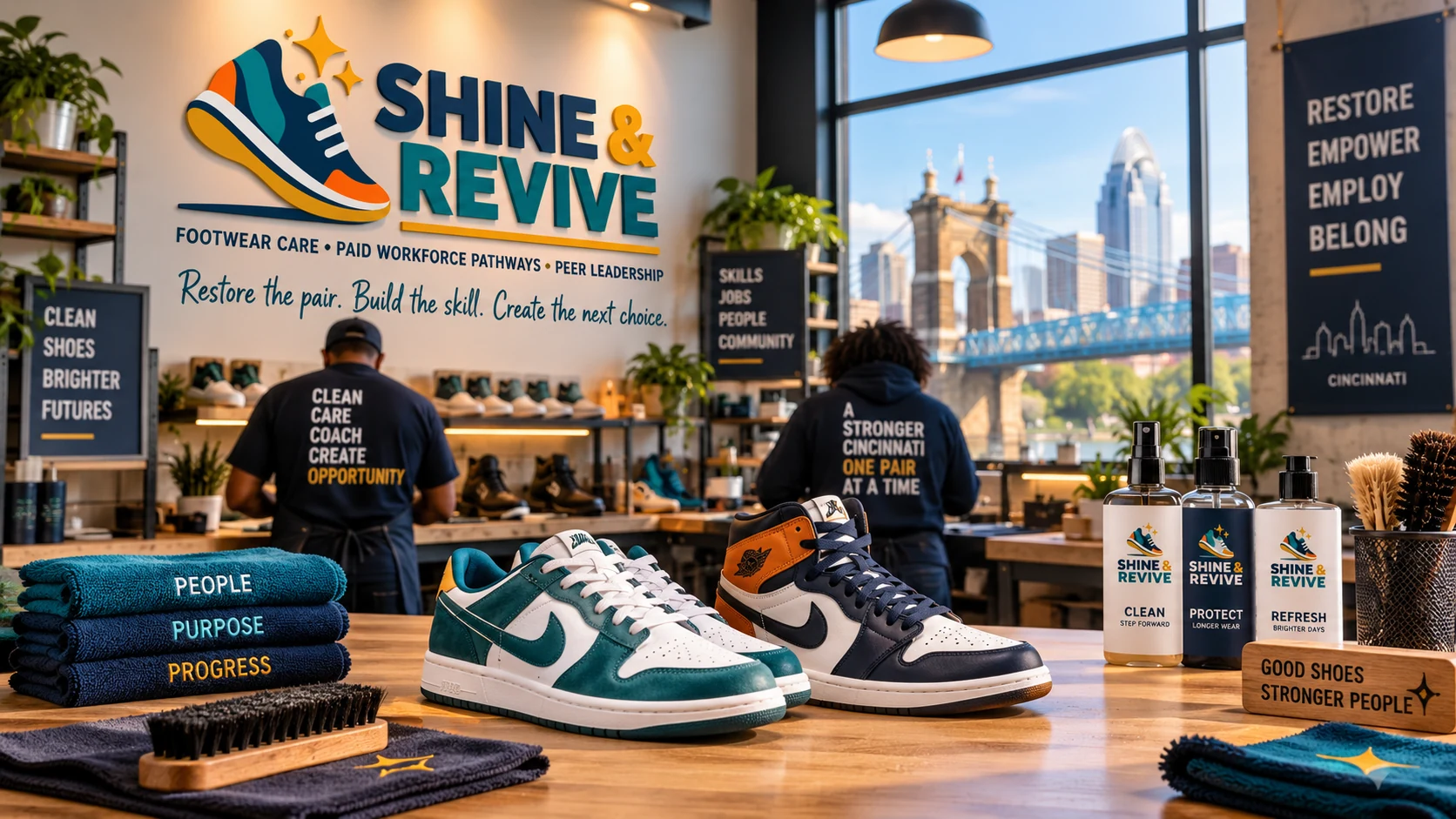
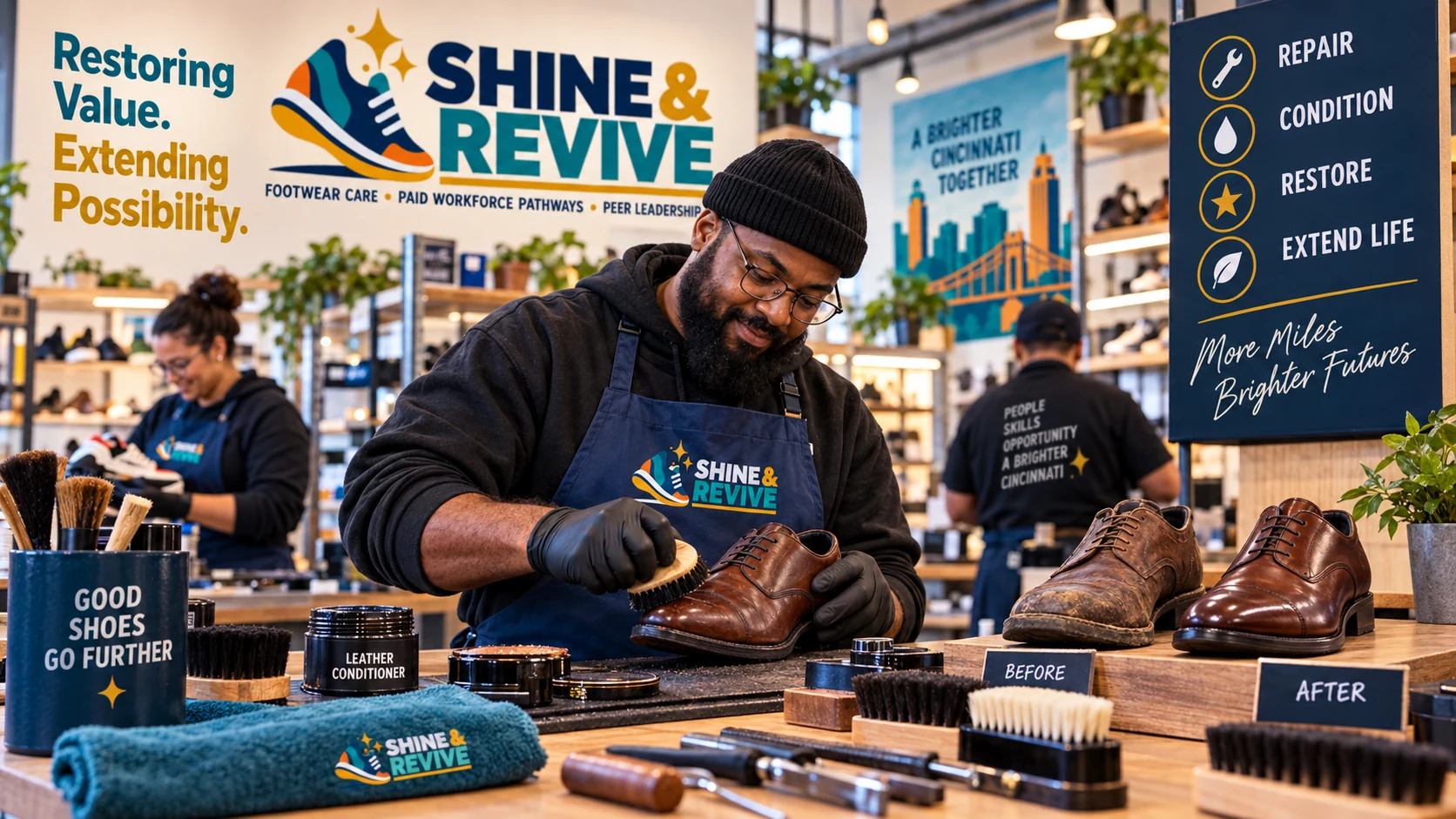
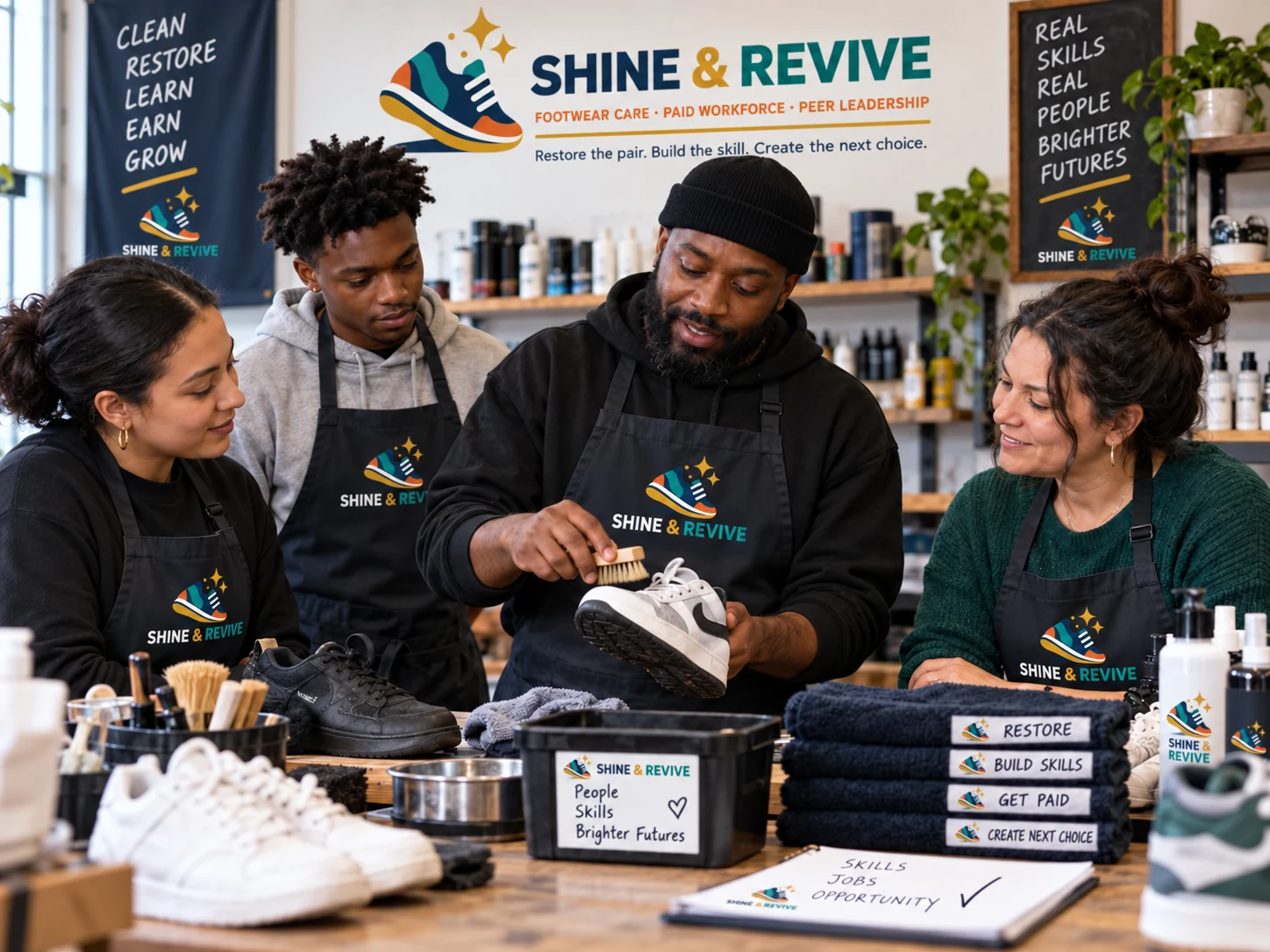
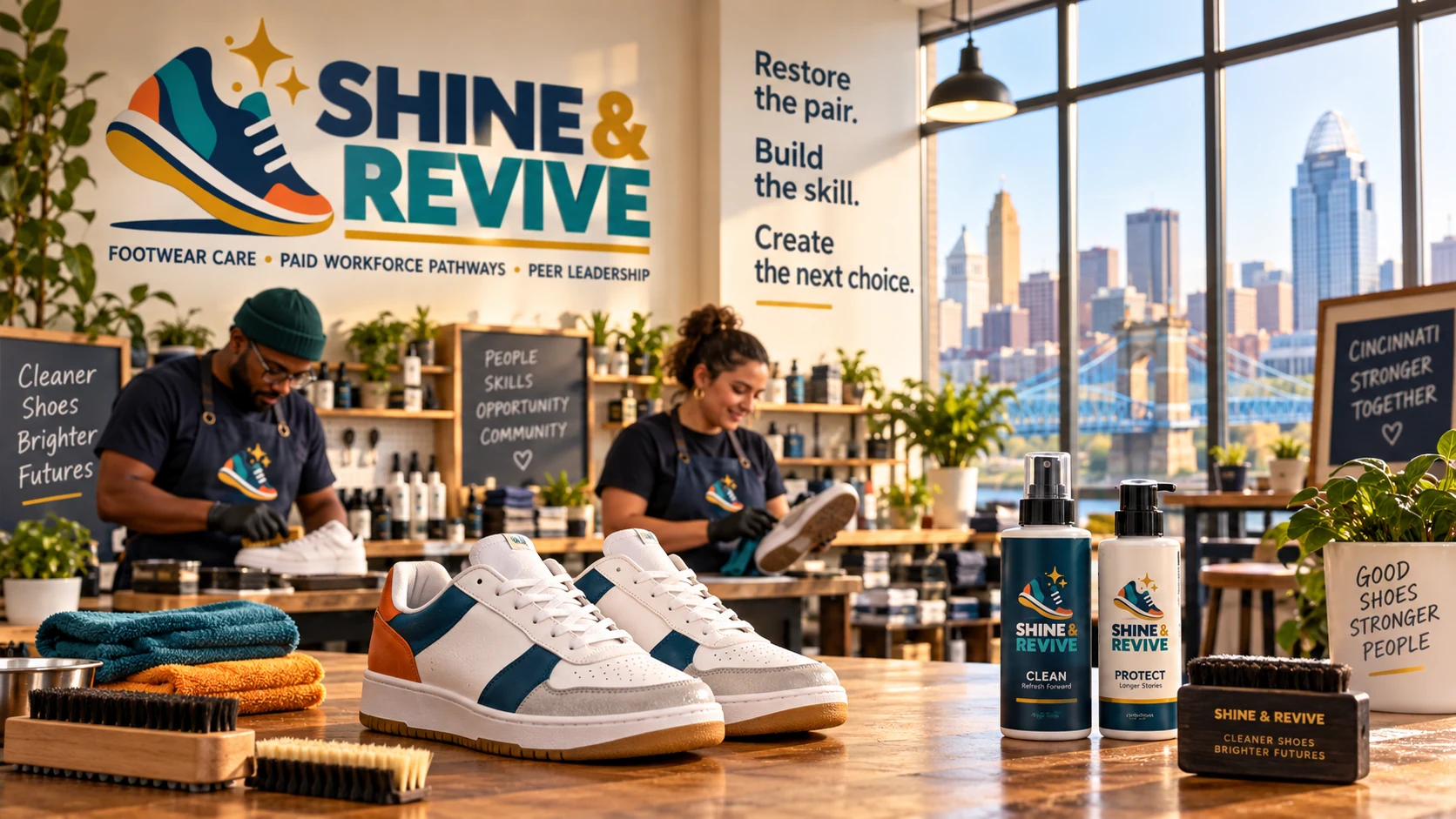
Concept visualization of a bright footwear-care workshop with adult workers and Cincinnati visible beyond the windows.Concept visualization
Workshop, tools, and Cincinnati contextIllustrates the intended model; not proof of an open location, active team, or current service.
Focused services

Five service lanes built around honest scope.

The pilot begins with work that can be assessed, authorized, trained, traced, dried, checked, and released safely. Permanent pricing and public ordering remain closed until the evidence gate is complete.

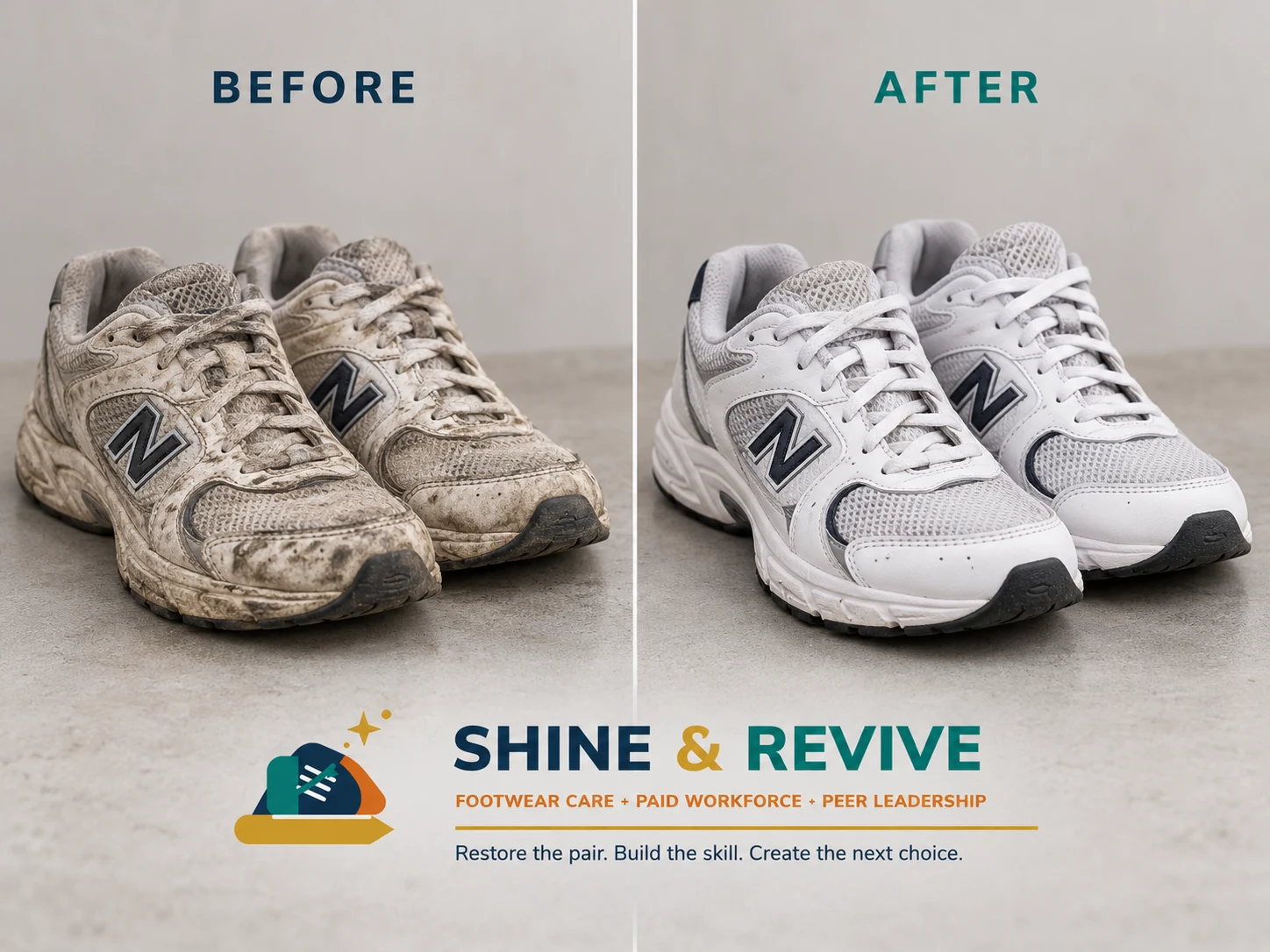
Concept before-and-after comparison of the same pair of white athletic shoes after footwear care. Concept visualization
01 · Pilot core

Refresh Clean

Exterior-focused care for everyday footwear, with documented intake, approved products, controlled drying, and quality review.

View Service
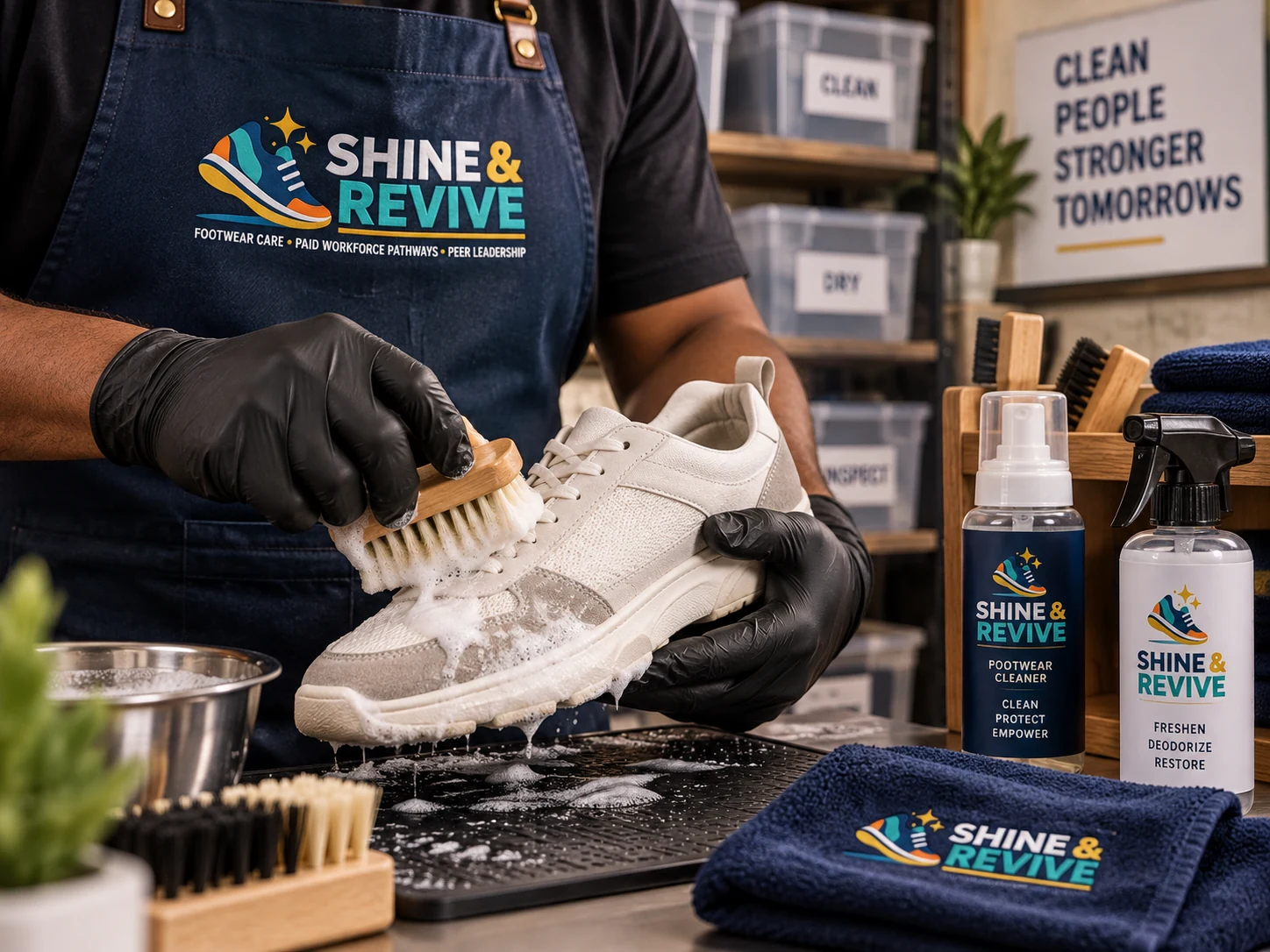
Concept visualization of gloved hands cleaning a sneaker with an approved brush at a protected workbench. Concept visualization
02 · Pilot core

Deep Clean

Material-specific full care that may include laces and removable insoles, performed only within an approved and authorized scope.

View Service
Concept visualization of an experienced worker conditioning and finishing a leather dress shoe. Concept visualization
03 · Limited scope

Premium Restoration

Competency-gated cosmetic finishing and approved minor restoration. Structural or specialist work is referred or declined.

View Service
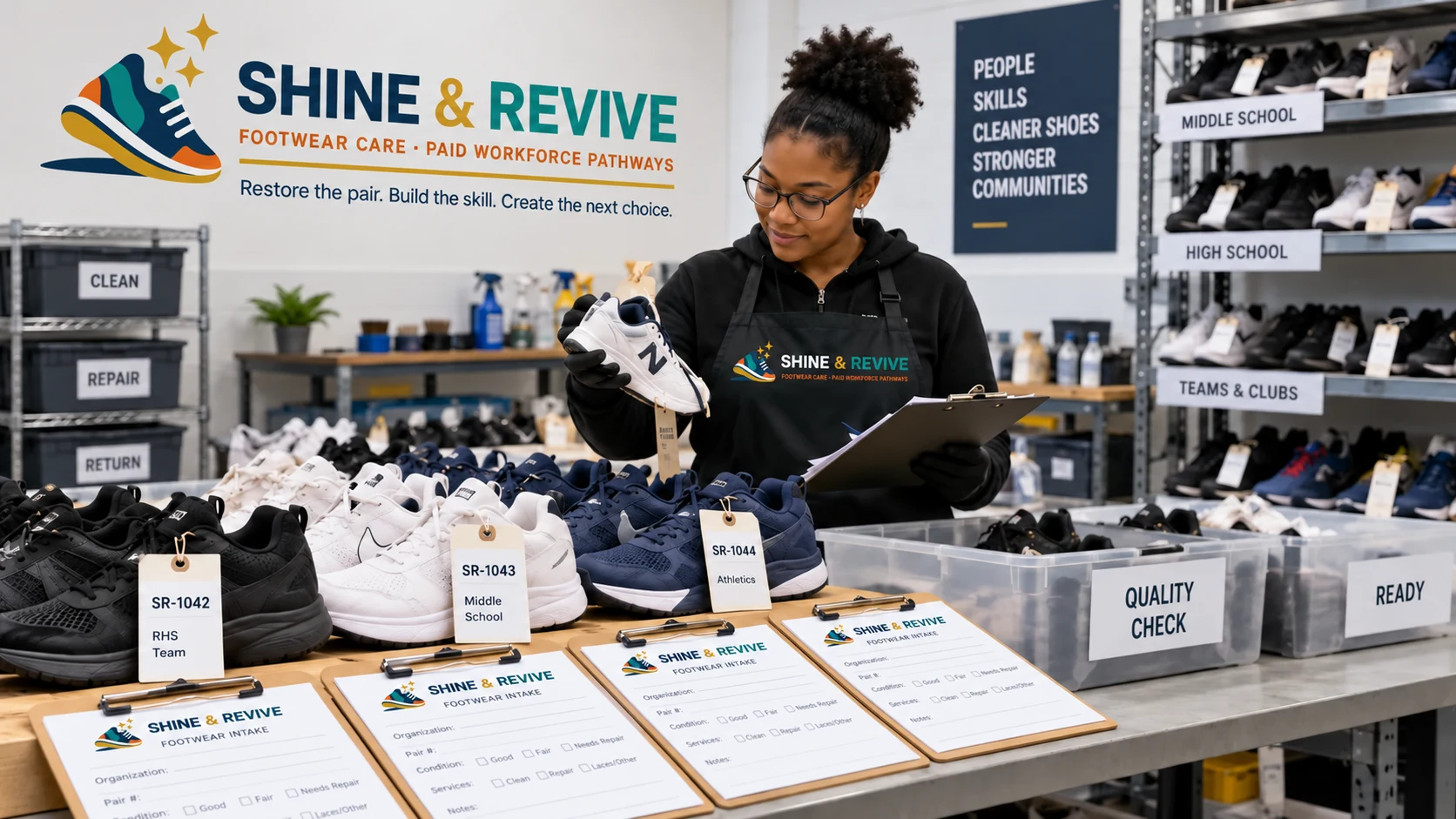
Concept visualization of an inventory coordinator inspecting tagged shoes and recording condition information. Concept visualization
04 · Priority lane

B2B Batch Care

Written service packages for schools, athletics, employers, housing, churches, workforce programs, and community partners.

View Service
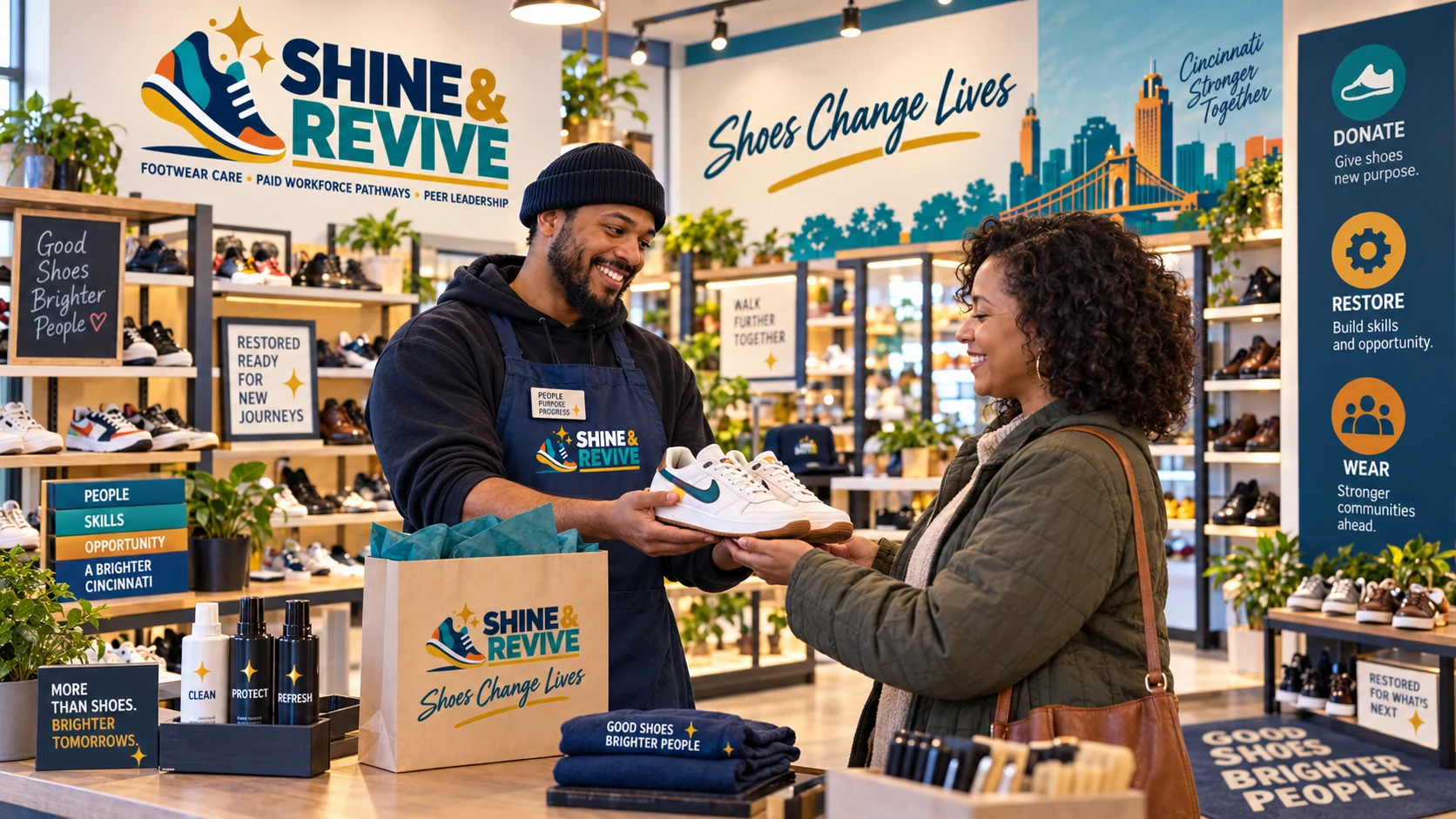
Concept visualization of a Shine and Revive store with retail display, service counter, and workshop space. Concept visualization
05 · Limited pilot

The Revived Collection

Condition-graded resale with traceable ownership or source, honest defect disclosure, documented disposition, and independent quality release.

View Service
Current public status: these are operating specifications, not active order acceptance, fixed prices, or turnaround promises.
The full life of a pair

From source to second life, every handoff leaves evidence.

A pair should never vanish into an undocumented back room. The lifecycle below connects product care, worker roles, safety, ownership, quality, and final disposition.

Concept visualization of a footwear lifecycle from donation and intake through cleaning, quality review, and display.Concept visualization
STEP 01

Source or customer intake

Receive a customer pair, approved batch, or lawful donation through a documented channel.

Primary role: Donation & Intake Coordinator
STEP 02

Ownership and authorization

Verify who owns the footwear, what may be done, and what disposition is permitted.

Primary role: Customer & Intake Associate
STEP 03

Safety and condition screen

Check contamination, mold, pests, recalls, counterfeit concerns, structural failure, and scope.

Primary role: Condition Screening Associate
STEP 04

Photograph, tag, and locate

Create the baseline photo set, assign a unique ID, and record the controlled storage location.

Primary role: Inventory & Custody Associate
STEP 05

Material assessment and quote

Identify materials, select an approved method, disclose risks, and confirm price or agreement status.

Primary role: Material Assessment Lead
STEP 06

Paid task assignment

Assign only authorized tasks to trained workers through payroll, supervision, and timekeeping.

Primary role: Bench Captain
STEP 07

Clean and prepare

Remove loose soil, clean by material, manage laces and insoles, and preserve the documented scope.

Primary role: Footwear Care Associate
STEP 08

Restore and finish

Perform only approved cosmetic finishing, conditioning, edge work, or minor restoration.

Primary role: Restoration Associate
STEP 09

Dry and reassemble

Use controlled air drying, reshape where appropriate, and reassemble the pair without hidden moisture.

Primary role: Drying & Reassembly Associate
STEP 10

Independent quality release

Compare the result with the intake record, disclose limitations, and stop release when standards fail.

Primary role: Quality Reviewer
STEP 11

List, return, award, or route

Complete the approved disposition: customer handoff, B2B return, condition-graded resale, charitable award, recycling, or disposal.

Primary role: Handoff / Listing Associate
STEP 12

Reconcile and learn

Close the work order, inventory, payment or restriction record; measure quality, rework, hours, and outcomes.

Primary role: Operations & Data Coordinator
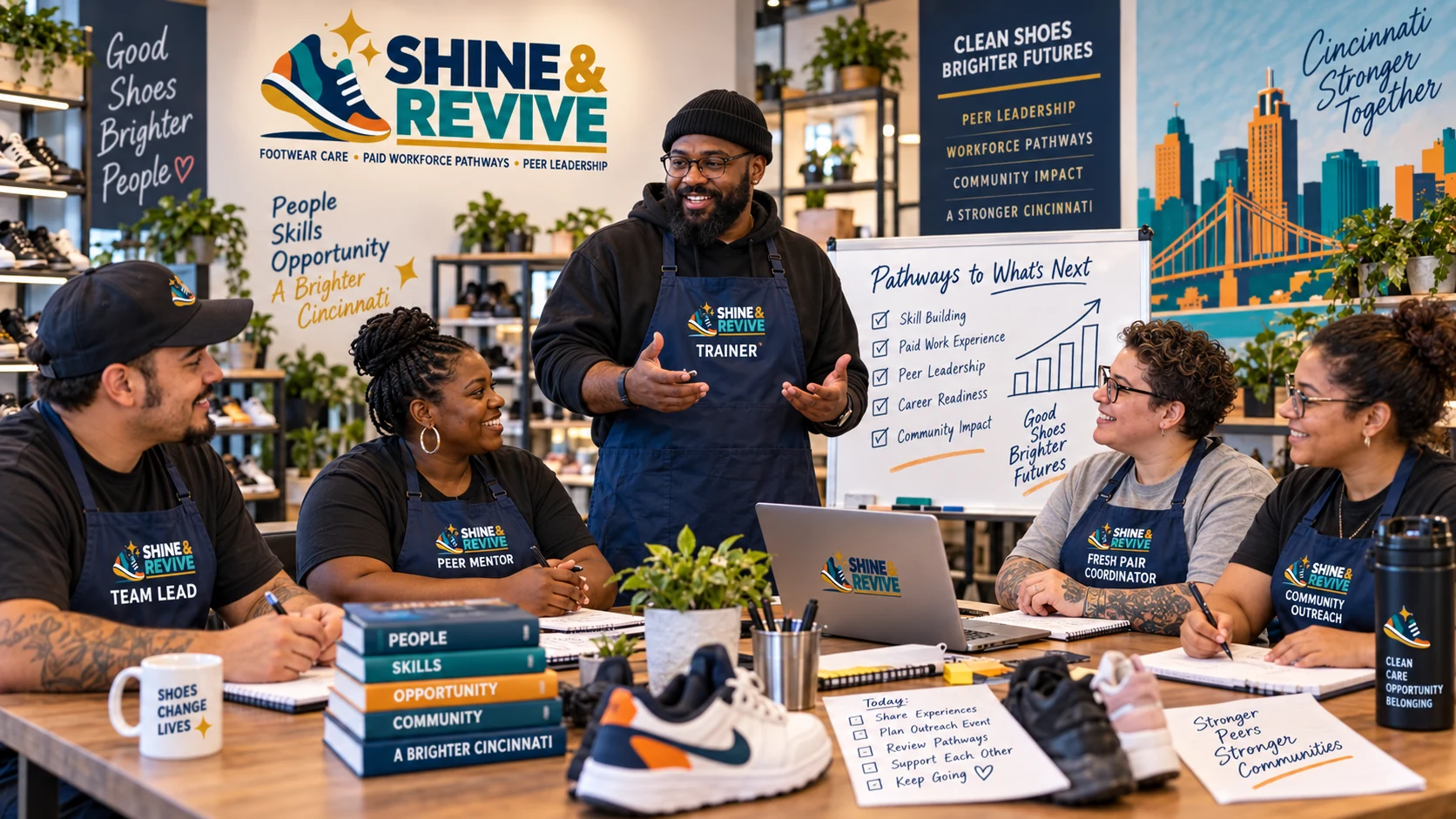
Concept visualization of a trainer coaching an adult team through footwear cleaning techniques.Concept visualization
Structured paid workforce trainingIllustrates the intended model; not proof of an open location, active team, or current service.
STEP paid workforce pathway

The shoes are the workbench. The workbench teaches skill. Skill creates wages. Wages create choices.

ObserveLearn the mission, zones, safety rules, customer-property controls, and career options without performing productive sales work.
PracticeBuild technique, documentation, safety, quality, and customer-service skill under supervision. Required or productive training is paid.
ProveDemonstrate competency through checklists, quality samples, safe conduct, accurate work orders, and reliable timekeeping.
EarnComplete approved paid production and service work through lawful payroll and timekeeping.
LeadAdvance toward bench captain, customer service, inventory, trainer, peer governance, or external employment roles as evidence supports readiness.
Paid-work rule. Required training and productive commercial work must be paid through a lawful employment, payroll, supervision, and timekeeping structure. Mission is not a coupon code for free labor.
Peer-run means authority

Lived experience belongs at the decision table—not only in the marketing photo.

Peer-run language is earned through substantive decision rights, budget influence, program evaluation, complaint authority, accountability, and succession. Paid production, voluntary peer community, and any future clinical or certified service must remain distinct.

Paid production

Employees work through payroll, supervision, timekeeping, safety, and quality controls.

Peer community

Voluntary belonging, mutual support, leadership, and community activity stay separate from commercial productivity.

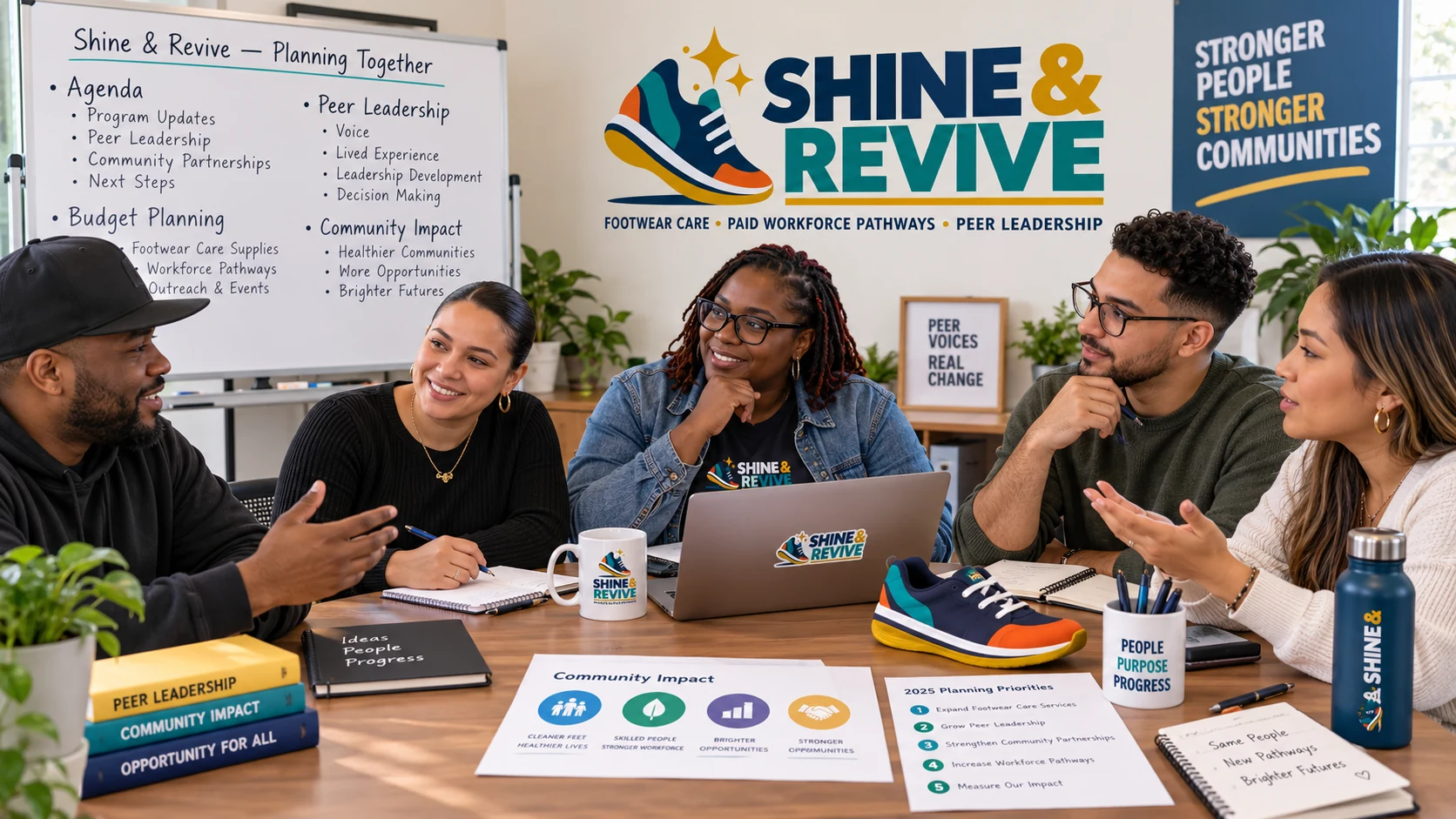
Concept visualization of a diverse peer leadership group reviewing program plans and community priorities.Concept visualization
Peer authority in planning and governanceIllustrates the intended model; not proof of an open location, active team, or current service.
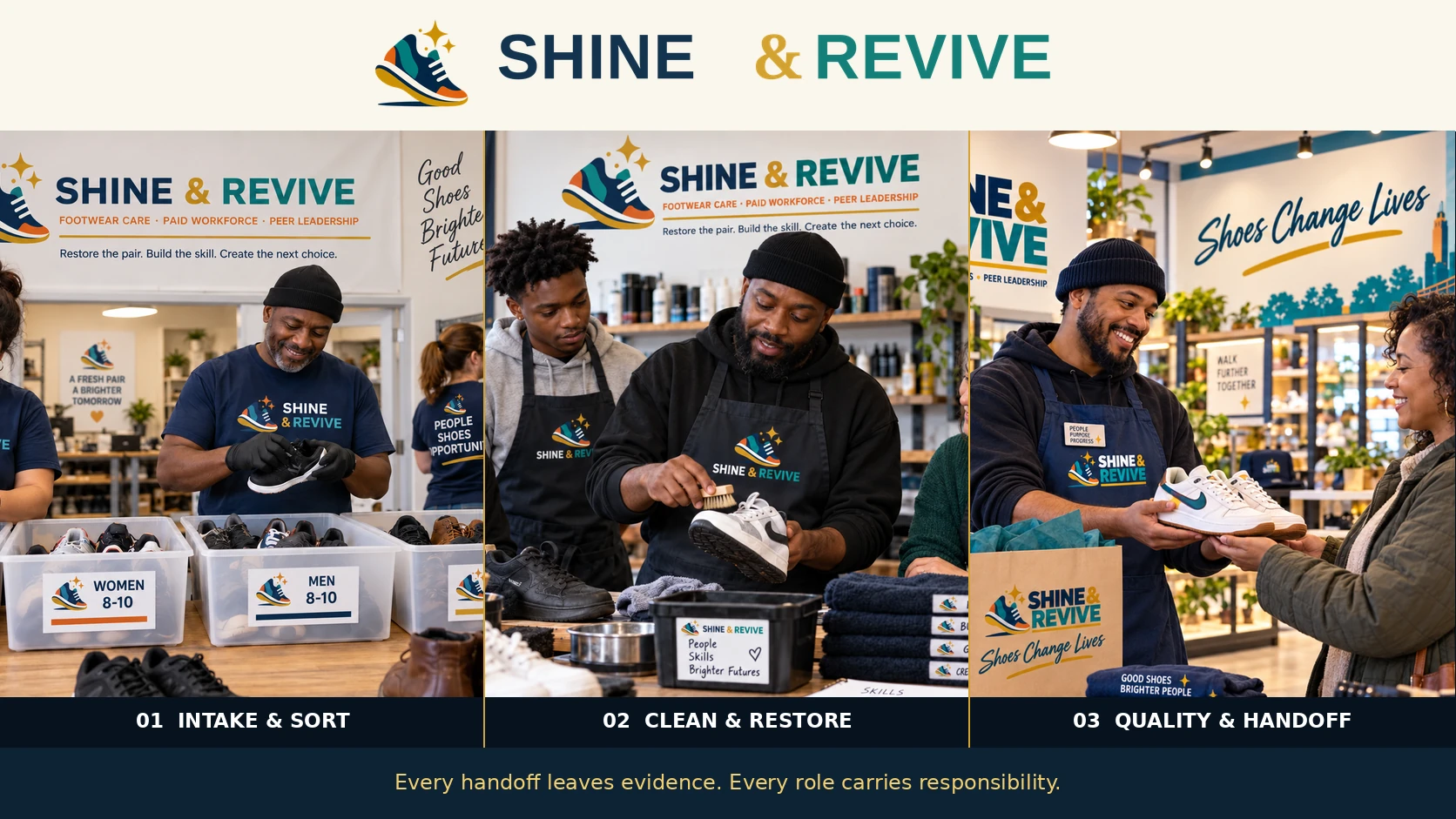
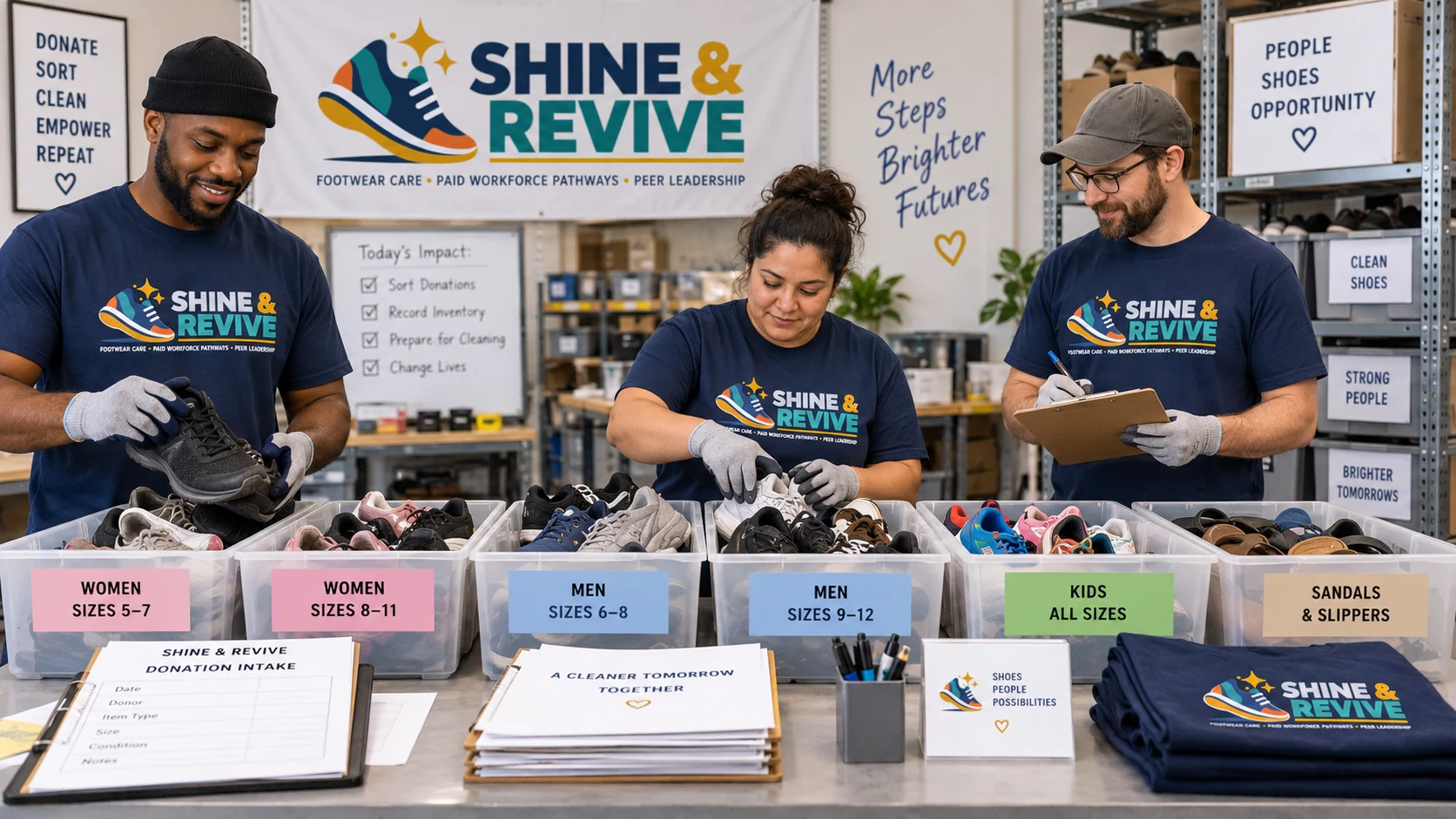
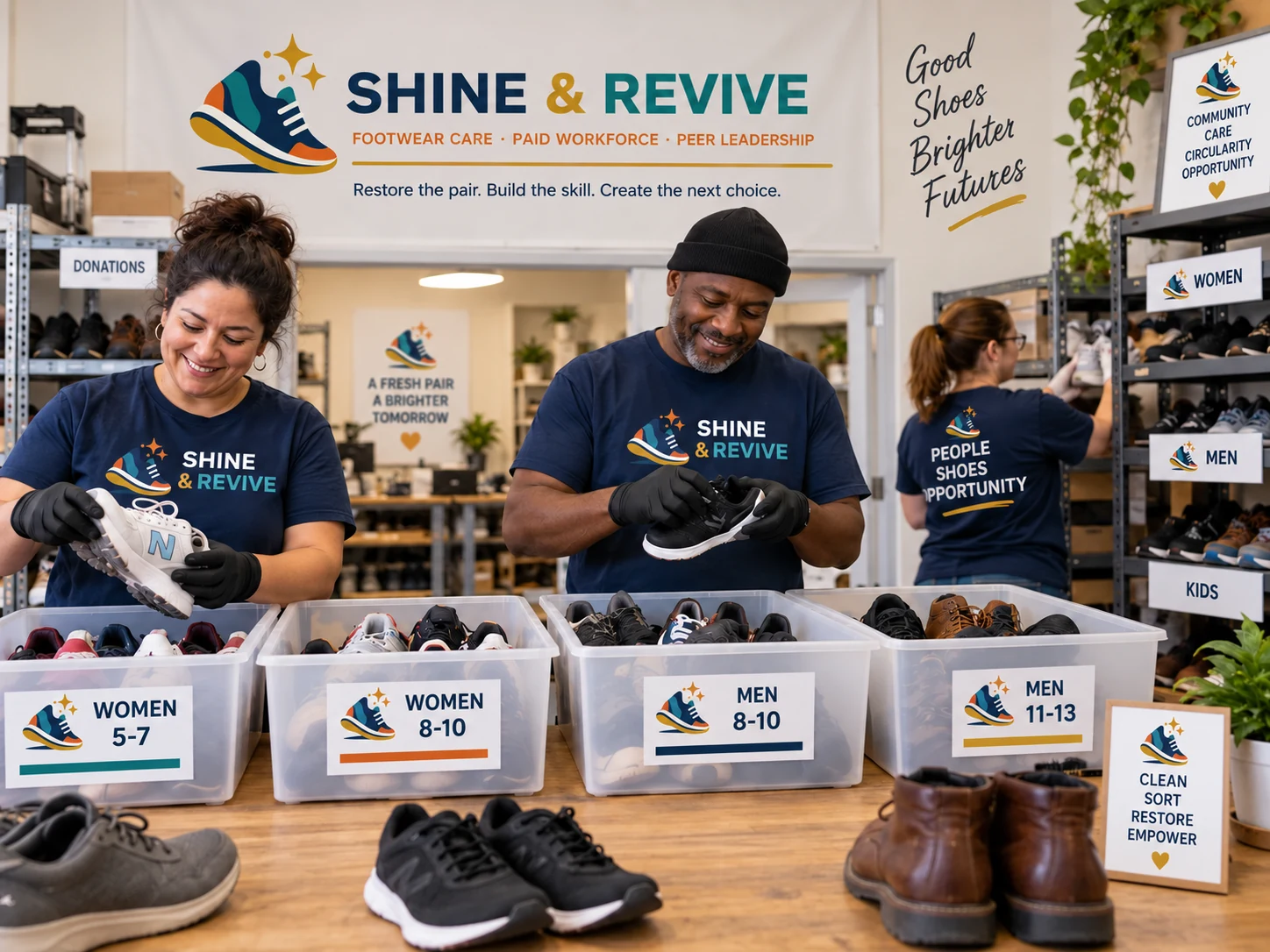
Concept visualization of a team screening and sorting donated shoes into labeled size categories.Concept visualization
Donation intake and size-based sortingIllustrates the intended model; not proof of an open location, active team, or current service.
Fresh Pair and donation pathways

Generosity still needs ownership, condition, restrictions, fit, privacy, and a documented destination.

The planned Fresh Pair Fund and shoe-donation pathway must protect dignity and separate charitable decisions from sales pressure. No one should have to perform hardship, gratitude, treatment participation, or recovery disclosure to receive footwear access.

Donation interest

Ownership transfer, safety screening, condition grading, inventory ID, accepted restrictions, and responsible disposition.

Review the planned process →

Fresh Pair Fund

Eligibility, restricted funds, nondiscrimination, conflicts, fit, private release, inventory removal, and reconciliation.

Review the charitable lane →
Operating commitments

The sentences that keep the mission from becoming a costume.

“Show the work. Protect the person. Tell the truth about the shoe.”

Images and public stories must demonstrate craft and evidence without turning hardship into marketing inventory.

“Mission is not a coupon code for free labor.”

Required training and productive commercial work must be paid through a lawful employment and timekeeping structure.

“Good intentions do not replace a claim ticket.”

Every accepted pair needs a lawful source or owner, unique identifier, documented location, authorized scope, quality decision, and completed handoff.

“We restore shoes. People are not restoration projects.”

The enterprise may create structure, wages, competence, belonging, and choice without defining people by diagnosis, trauma, or recovery history.

Public status

Build the full structure on paper. Earn the right to operate through evidence.

The current posture is operational hold. Partnership conversations are welcome; public orders, hiring, shoe collection, charitable distributions, and storefront operations remain closed until the applicable gates are approved.

Gate 01

Legal & Governance

Entity, board, authority, tax posture, conflicts, contracts, peer decision rights, and public status.

Gate 02

Site & Insurance

Zoning, occupancy, accessibility, security, utilities, customer-property coverage, inventory, and emergency readiness.

Gate 03

Labor & Payroll

Roles, wages, classification, training, supervision, timekeeping, workers’ compensation, and backup coverage.

Gate 04

Safety & Environment

PPE, SDS, ventilation, chemicals, equipment, sanitation, first aid, incidents, and stop-work.

Gate 05

Custody & Quality

Photos, tags, location, authorization, approved methods, drying, QA, complaints, and handoff.

Gate 06

Capital & Demand

Runway, pricing study, wages, recurring demand, controlled capacity, equipment, and cash controls.

Concept visualization