What brings you to Reach One?
You should not have to understand the organizational chart before finding the right doorway. Choose the path closest to what you need today.
Complete digital campus
Every Reach One site and program—status made visible
See the complete campus in one place. Each application shows what it is, who it serves, its current status, and what must not be inferred from the page.

Institutional + Clinical Front Door
Reach One Main Site
The central front door for care, trust, rights, locations and all Reach One applications.
Open applicationPublic boundary
The Main Site introduces the ecosystem but does not imply every planned app or service is active.

Clinical Service Division
Clinical Services
Adult PHP, IOP, OP, counseling, groups, case management, peer integration, virtual care and transitions.
Information available · public link gatedPublic boundary
Service pages do not prove current authority, payer, staffing, location or enrollment.

Clinical Youth & Family Behavioral Health
Reach One Youth
The new Reach One youth mental-health application, separate from Cincy Grind Time and the former B.U.Y. architecture.
Information available · public link gatedPublic boundary
Activities, sports, meals, media and homework are not automatically clinical services.
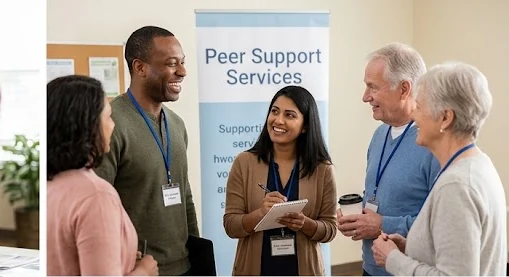
Peer-Run Recovery Support
Peer Support Services
Lived experience, recovery capital, action planning, community connection and peer workforce development.
Information available · public link gatedPublic boundary
Peer Support complements care; it is not psychotherapy or emergency response.

Teaching Practice & Professional Formation
Training & Development Institute
Structured education, deliberate practice, supervision and competency verification.
Information available · public link gatedPublic boundary
Trainee-centered and supervisor-governed; completion does not independently confer credentials.

Nonclinical Workforce / Economic Mobility
Workforce Development & Enterprise
Assessment, competency, paid practice, employment, freelance, enterprise and ownership pathways.
Information available · public link gatedPublic boundary
No job, wage, customer, revenue or ownership result is guaranteed.

Educational Library
Learning Media & Golden Thread Comics
Golden Thread comics, training videos and practice-based learning modules.
Information available · public link gatedPublic boundary
Education is not treatment, supervision, certification or an EHR.
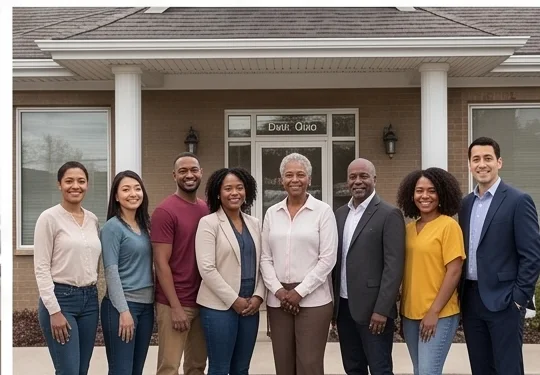
Nonclinical Prevention & Early Response
Building Prevention Through Community
Protective factors, community readiness, early response and completed pathways to help.
Information available · public link gatedPublic boundary
Prevention does not diagnose or silently become treatment.

Clinical Modality Hub
Virtual Care
How authorized Ohio services may be delivered virtually.
Information available · public link gatedPublic boundary
A virtual page does not activate the underlying service, provider, payer, platform or emergency plan.

Nonclinical Youth Development & Mentorship
Cincy Grind Time
A separate sports, mentoring, family and community-development application.
Information available · public link gatedPublic boundary
Cincy Grind Time is not the Reach One clinical youth program.

Authenticated Zero-PHI Operations & Knowledge
Private Staff Campus
Policies, roles, Twelve Core Functions, training, quality, launch readiness and website governance.
Information available · public link gatedPublic boundary
Not an EHR, billing platform, incident system, HR file or PHI repository.
Programs being built with status made visible
A polished page is not proof of operational readiness. Reach One separates program design, activation, payer/site readiness, and current enrollment status so the public can see the difference.

Adult Intensive Outpatient Treatment
A structured treatment episode for adults who need more support than standard outpatient care without 24-hour treatment.
Boundary: The exact launch schedule, payer configuration, staffing and intake workflow must be verified before an enrolling CTA is enabled.
View program page
Adult Outpatient & Counseling
Individualized outpatient care through direct-entry treatment or structured transition from Reach One IOP.
Boundary: Frequency is based on assessed need, functioning, risk, response, medical necessity and preference—not a universal schedule.
View program page
IOP Step-Down 9/6/3
Three clinically governed outpatient planning phases that reduce or increase support according to reassessment.
Boundary: The 9/6/3 bands are not automatic dosage rules or a calendar conveyor belt.
View program pageCase Management & Services Coordination
Treatment-linked help addressing barriers, referrals, coordination, monitoring and completed handoffs.
Boundary: Case management is not psychotherapy, transportation-only work, or an open-ended concierge service.
View program page
Adult Peer Support
Lived-experience support that builds hope, recovery capital, self-advocacy, community connection and transition capacity.
Boundary: Peer Support complements care; it does not replace psychotherapy, case management, medical care or crisis response.
View program pageYouth After-School Behavioral Health
A clearly clinical after-school model that uses engaging environments to practice mental-health and functional skills.
Boundary: Meals, homework, sports, media and recreation are not treatment merely because they occur around treatment.
View program page
Youth Outpatient & Family Care
Individual and family mental-health services organized around functioning at home, school and in relationships.
Boundary: Assessment determines fit; the website describes observable challenges and does not diagnose visitors.
View program pageVirtual Behavioral Health
A delivery modality for appropriate services—not a separate standard of care.
Boundary: A secure platform, location verification, privacy, emergency planning, licensure and payer rules must align before activation.
View program pageAdult Partial Hospitalization
A future medically governed, multidisciplinary level of care requiring substantially more infrastructure.
Boundary: This page is informational only; PHP is not represented as active or accepting referrals.
View program pageYouth Day Treatment / PHP
Future levels requiring specific psychiatric, medical, nursing, site, staffing and safety controls.
Boundary: Accredited or designed scope is not the same as operational availability.
View program pageOur purpose
Care that builds capacity—not permanent dependence
Treatment can create stability. Skills can create capacity. Relationships can create connection. Opportunity can create participation. Accountability helps progress survive contact with ordinary life.
Reach One therefore asks more than whether a person attended services. We ask what changed in functioning, what the person can now do, which barriers were reduced, which supports were strengthened, and what the next responsible transition should be.
One human journey, one clinical record of change
The client journey describes development. The Golden Thread describes how clinical decisions remain traceable and defensible.
Client Journey
- 01Engage
- 02Stabilize
- 03Build
- 04Practice
- 05Contribute
- 06Transition
Clinical Golden Thread
- 01Assessment
- 02Meaning
- 03Problem
- 04Goal
- 05Objective
- 06Intervention
- 07Evidence
- 08Review / Transition
Peer Support in practice
Lived experience becomes useful through relationship and action
Individual photographs replace dense contact sheets so each image can communicate one clear idea and carry meaningful alternative text.





Program-concept photography. No person shown is identified as a Reach One client or participant.
How we work
What makes the Reach One model different?
These are operating controls, not decorative slogans.
Status before promotion
Every service is labeled Active, Enrolling, In Development, Readiness-Gated, Paused, or Retired. The label controls the CTA.
Completed handoffs
A referral is not complete when a phone number is handed over. Reach One tracks identification, contact, acceptance, scheduling, access, and follow-through.
Activity/service separation
Meals, sports, homework, transportation, media, and ordinary mentoring are not treatment merely because they occur near treatment.
Competence before independence
Credentials matter, but readiness is demonstrated through training, practice, observation, correction, retest, and supervisor sign-off.
Measurement with meaning
Programs are expected to measure access, effectiveness, experience, efficiency, integrity/safety, and workforce capacity.
Public claims with evidence
Accreditation, payer, partnership, location, schedule, staffing, and outcome claims are dated, owned, reviewed, and removable.
Adult care
Behavioral health for adults
The adult continuum is designed around clinical need, functioning, safety, preference, and response. Adult IOP is an immediate implementation priority. Outpatient care includes direct-entry treatment and a structured IOP step-down pathway. Case management and Peer Support connect treatment to the practical work of recovery life.
Adult PHP remains readiness-gated until the medical, nursing, psychiatric, multidisciplinary, utilization-review, site, staffing, and documentation infrastructure is verified.
Youth & family
Mental-health support for youth and families
Reach One Youth & Family Behavioral Health is being designed for two developmental cohorts: ages 5–12 and 13–17. The after-school model uses structured, engaging environments to practice emotional regulation, confidence, boundaries, communication, routines, problem-solving, and family functioning.
The activity is the environment. The assessed functional need is the target. The qualified intervention is the service. The young person’s response is the evidence.
Quality is built into the operating system
Reach One’s executive dashboard is organized around six domains. Program-level measures also track access, effectiveness, experience, efficiency, and integrity/safety.
Census & Capacity
Who is receiving care, how much safe capacity remains, and whether growth is paced.
Access & Conversion
Referral, screening, assessment, admission, redirect, and completed-handoff performance.
Clinical & Documentation Integrity
Timeliness, individualization, medical necessity, Golden Thread, signatures, and corrections.
Authorization & Revenue Integrity
Eligibility, authorization, clean claims, denials, collections, and nonduplication.
Safety & Outcomes
Risk, incidents, grievances, functioning, progress, transitions, and remeasurement.
Workforce Capacity
Vacancies, caseload, supervision, competency, coverage, turnover, and safe staffing.
Learning Media
The Golden Thread Comic Library
Visual stories turn invisible clinical reasoning into something staff, trainees and partners can see, discuss, practice and review.
Private operations
The Staff Campus holds the standard behind the public promise
The public site explains Reach One. The Staff Campus helps authorized workers find the policy, role, tool, owner and next action.
Private operations environment
Reach One Staff Campus
Controlled policies, Twelve Core Functions, role guides, training, competencies, claims governance, launch readiness and quality tools belong here. Client records remain in approved systems of record.
Open Staff CampusNext step
Start with the truth that is current today
Review the status of each service, then choose a safe next step. The website will not use “Enroll Now” while screening, eligibility, staffing, site, payer, or secure-intake gates remain open.
Source and publication control
Designed from Reach One’s controlled planning record
This page is generated from the Reach One website/strategic planning package, SPW readiness baseline, executive decision register, program-design materials, and website build charter. Production publication still requires current evidence, named approval, workflow testing, and a rollback path for any claim that can change.